Stay always up to date about the Seiser Alm
Subscribe to the newsletter
Receive the latest tips, events, offers, and special experiences directly in your inbox.
Seasonal, concise, and inspiring – just like your holiday.
Sign up for the newsletter
Accommodations
002-skifahren-puflatsch-roschan-fill-20260217

All facts at a glance

Setting off well informed into the Seiser Alm ski area

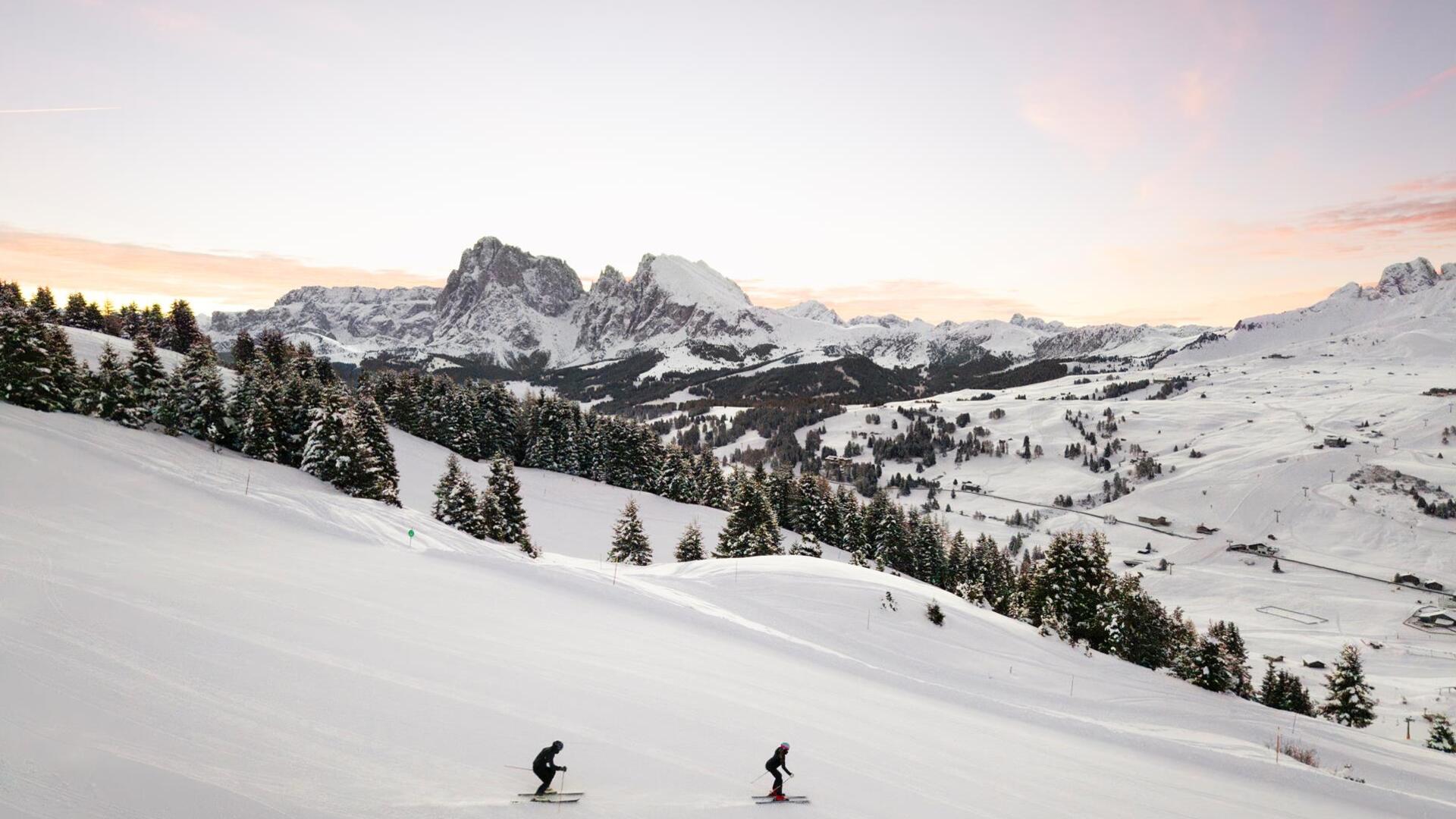
The Seiser Alm ski area is equipped with state-of-the-art technology and offers the highest level of comfort in every sector. Each of the 22 ropeway systems ensures maximum safety for winter sports enthusiasts and contributes to a smooth, enjoyable ski day in the Dolomites Region Seiser Alm. Here, you can explore the technical details, awards and the story behind the development of today’s Seiser Alm/Val Gardena ski area.
From the days of walking uphill to today's ski resort
The story of the Seiser Alm/Val Gardena ski area
  • How it all began
  • The first ropeway systems
  • The first ski school
  • Development to the present day
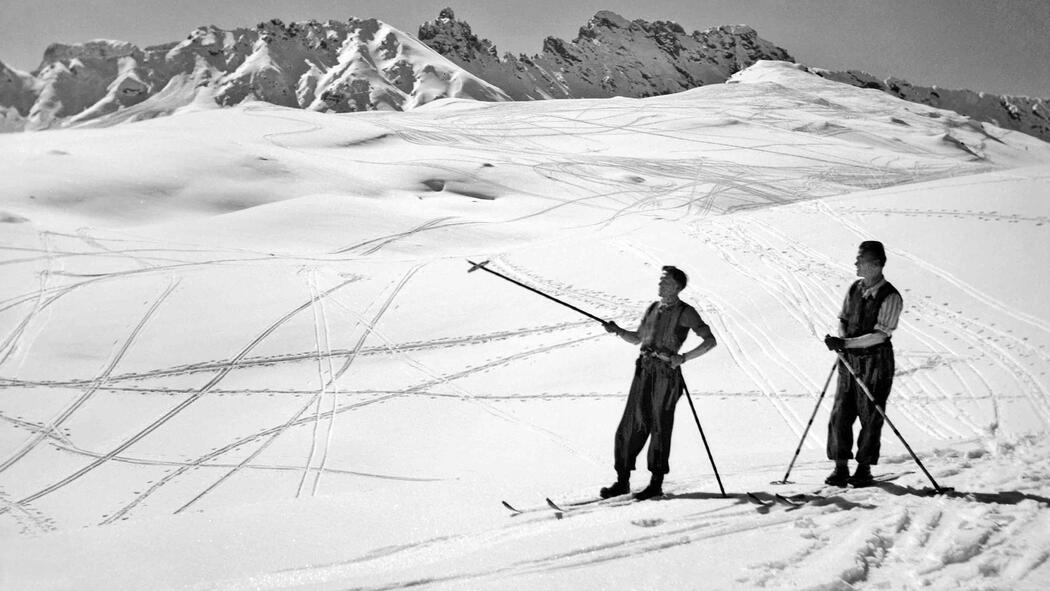
  • Two skiers at Goldknopf
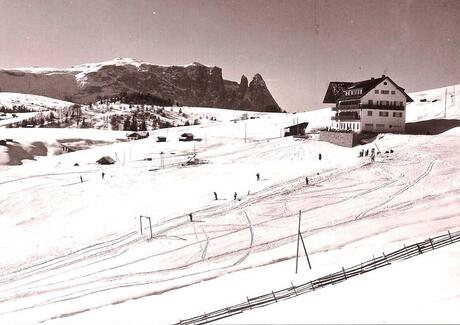
    A ski area that wasn’t yet a ski area
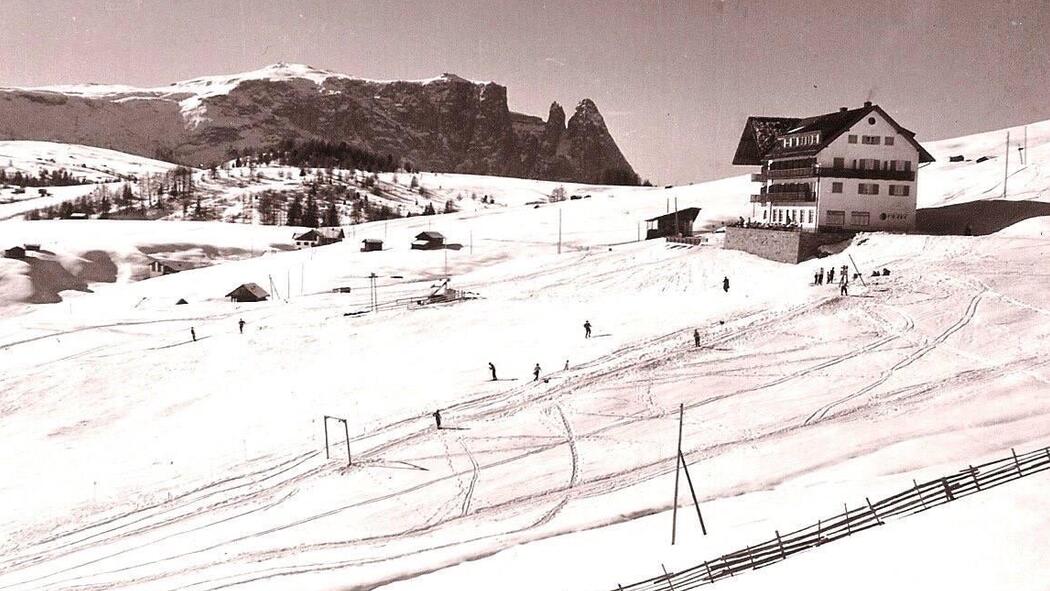
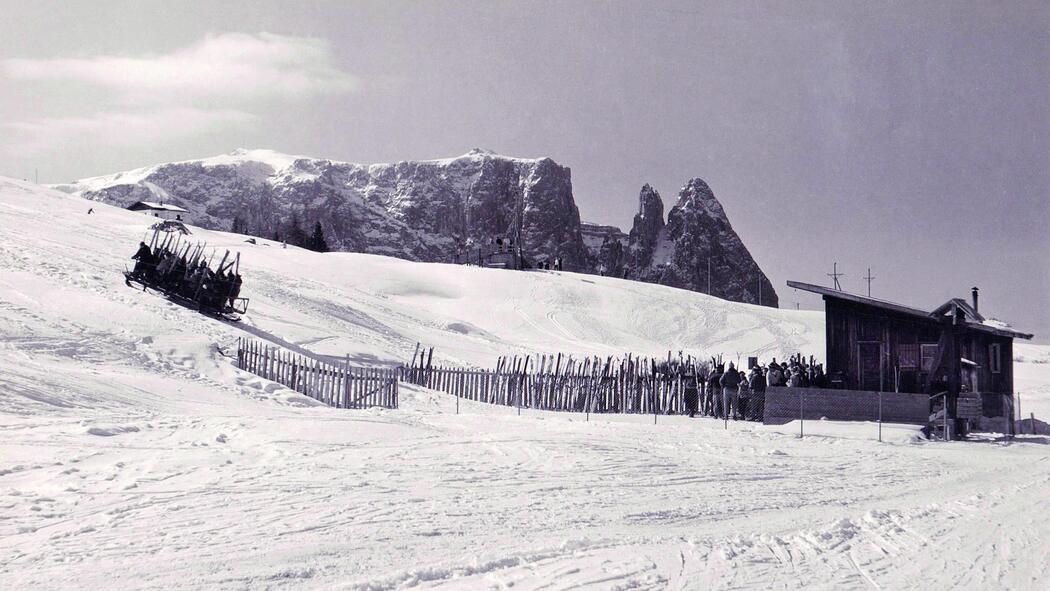
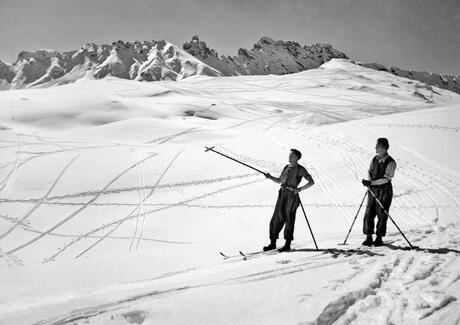
    Long before any ropeway systems were built on the Seiser Alm, the plateau was already considered an ideal place for skiing. Back then, anyone wishing to ski had to shoulder their equipment and climb up the high plateau by foot. Even ski races were already being held at this time.
  • Rabanser ski lift
    Technology arrives on the Seiser Alm
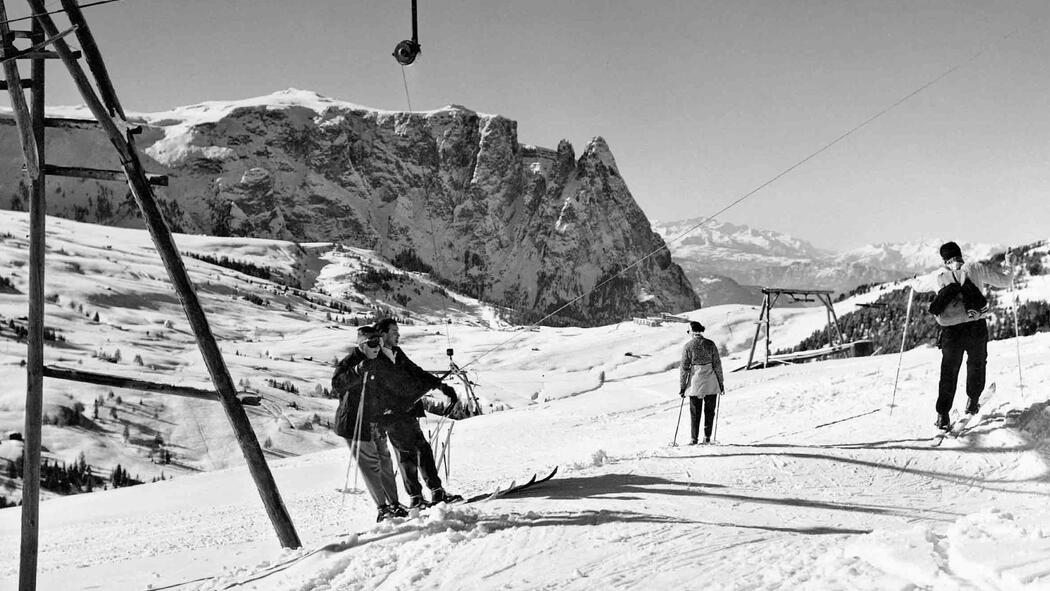
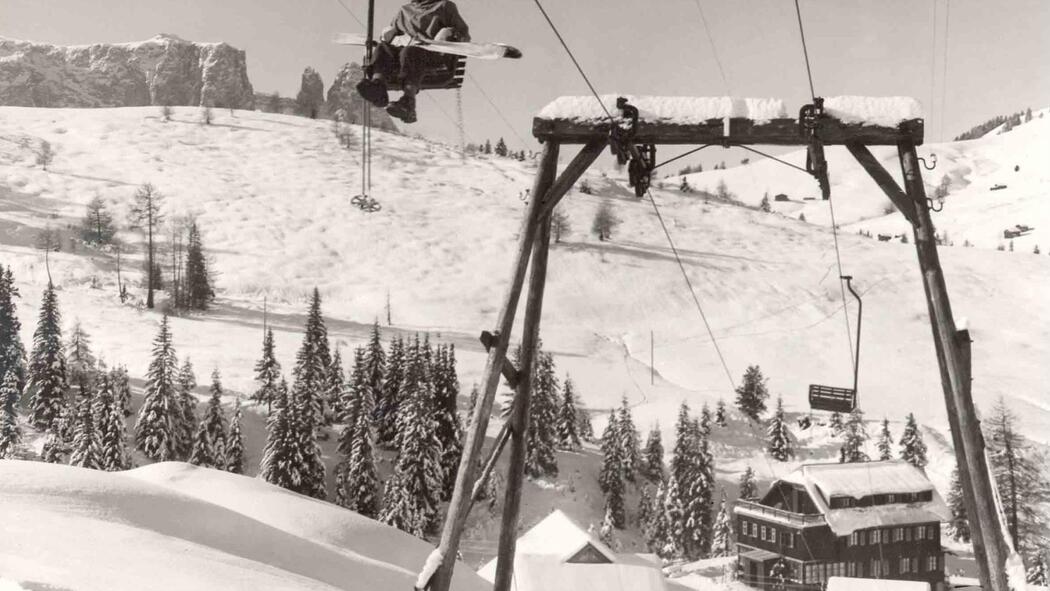
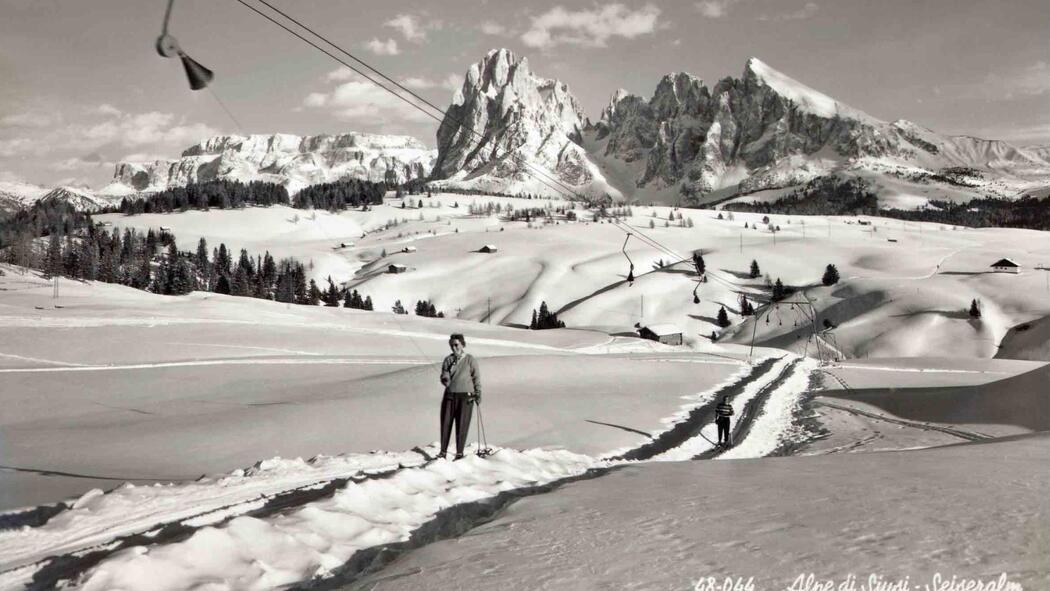
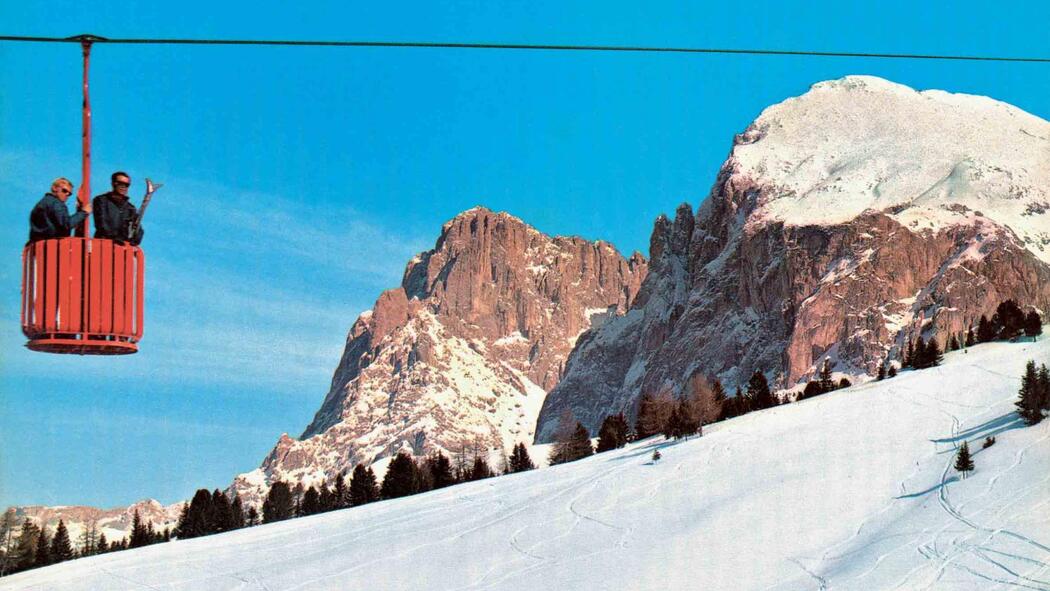
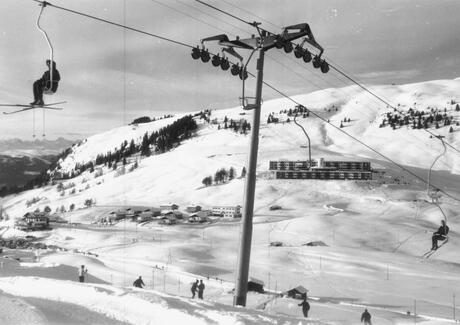
    In the 1938/1939 winter season, the first lift on the Seiser Alm opened: the “Slittovia Joch-Panorama” sled lift. In 1940, the first ski lift followed – the “Medzì Lift” – and in 1949, the first chairlift, “Monte Piz”, went into operation.
  • Skiing as it used to be
    Learning to ski becomes possible
    With the founding of the first ski school in 1956, more and more people had the opportunity to learn how to ski. Even ski legends such as Hans Steger and his wife Paula Wiesinger made their first turns at the ski school.
  • Seiser Alm Cable Car
    Continuous evolution towards refined technology
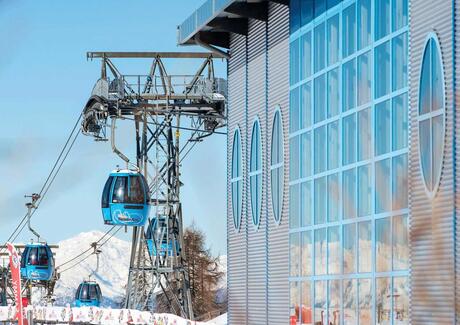
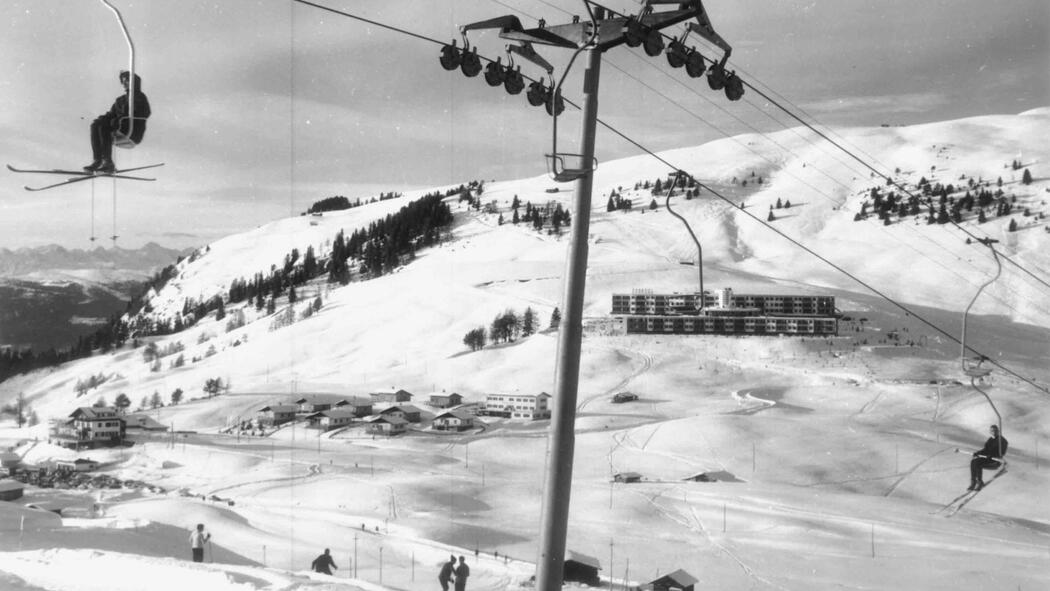
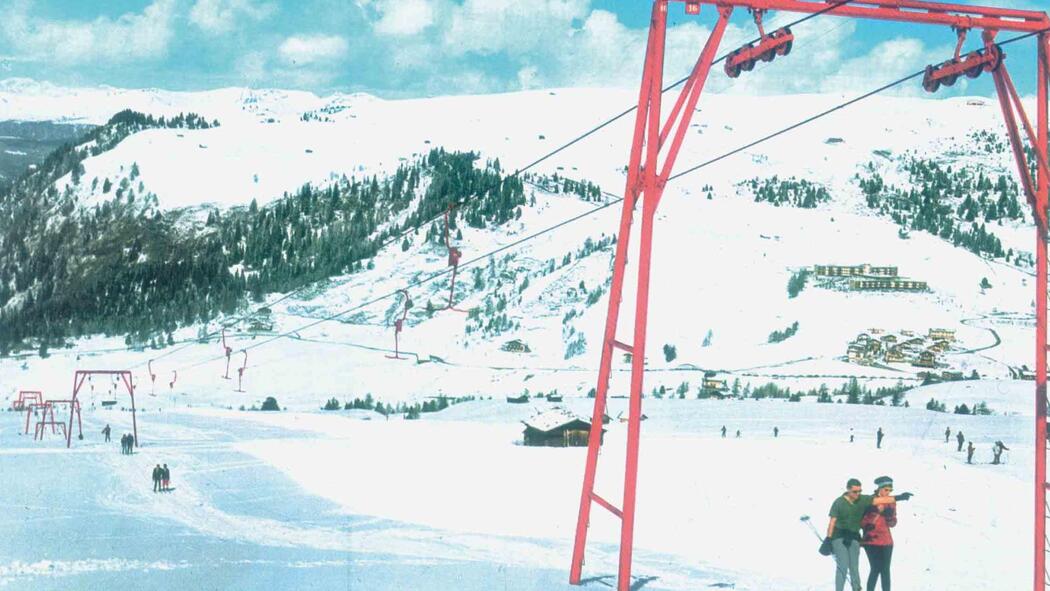
    Over time, more than 20 modern ropeway systems have been built on the Seiser Alm, making 62 kilometres of slopes accessible. In 1966, the potential was recognised, and a connection between the Seiser Alm and Val Gardena ski areas was established. Today, the Seiser Alm/Val Gardena ski area, with 181 kilometres of slopes and 79 ropeway systems, is the largest in the Dolomites.
ALPE 
Special - 80 years ski area Seiser Alm 
Safety comes first

Cable cars & technical details

  • 3 ski lifts: Very popular with children and beginners
  • 6 fixed-grip chairlifts (CLF): Ideal for shorter distances and pistes
  • 10 detachable chairlifts (CLD): Comfortable boarding and disembarking guaranteed
  • 1 Telemix: Maximum comfort for winter sports fans
  • 2 bicable gondola lifts: Fast transport with few support towers
  • Magic carpets & more: Various uphill aids for short distances
  • 360° safety: Child safety features on all ropeways; comprehensive, regular maintenance
Sostenibility in the ski resort
Our contribution to cutting C02 emissions
  • The Importance of our natural landscape
  • Measures taken to date
  • Environmental protection & green energy
  • Snowmaking & slope preparation
  • For the future of our region
    Nature is our greatest asset, and we must do everything in our power to protect it to the best of our ability. Here at the Seiser Alm ski resort, we also want to do our bit.
    The work of cable car operators is hinged upon the existence of pure, untouched countryside; it is clear, therefore, that we must - and above all want to - protect this asset not only for ourselves, but also for future generations.
  • We have been committed to environmental and climate protection for many years now. By using green electricity and optimising snowmaking and slope preparation, we reduce our carbon footprint. That which we cannot reduce, we compensate: Unavoidable emissions are offset by financial support towards local climate-based projects (ex. Bike2Work).
  • All the lifts on the Seiser Alm are electrically operated. Certified green electricity from South Tyrolean hydroelectric power, which is produced without CO2, is used for both the ropeways and the snow-making equipment. Environmental protection also concerns landscape conservation: in order to preserve the natural landscape, lift stations are embedded as much as possible in the surrounding area, stations of the cabins/chairs are built underground and, when greening, the previously removed grass tile is reused or seeds of the mother plants are harvested and sown again.
  • All slopes of the Seiser Alm receive artificial snow with the help of nearly 100 snow cannons. The water for the systems is mostly dammed in artificial ponds and is led to the snow cannons by seven pumping stations with electrically operated pumps. Technical snow consists exclusively of water and air.
    Great attention is paid to the preparation of the slopes. About twelve snow groomers maintain the slopes every day, usually between 5 p.m. and 12 a.m.
Wintertime in the Dolomites Region Seiser Alm
You might also be interested in