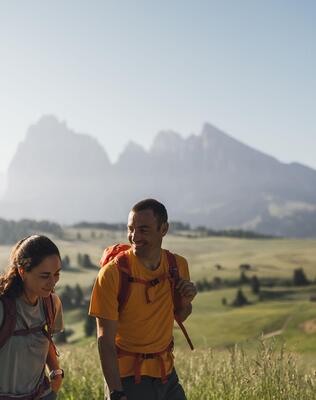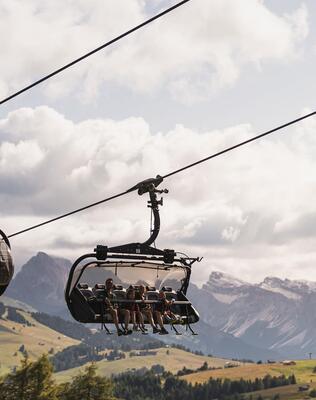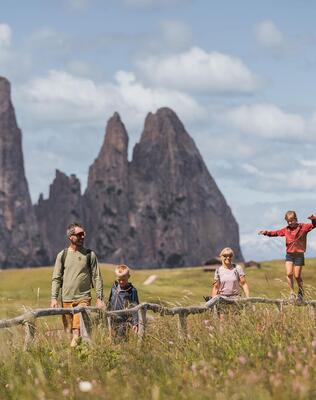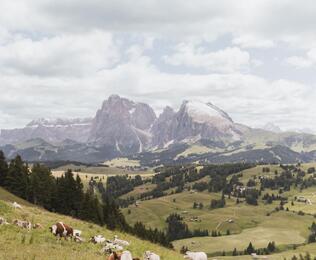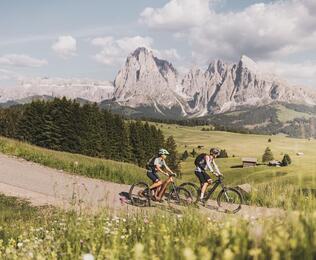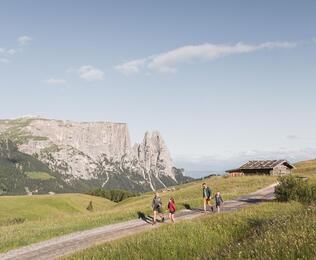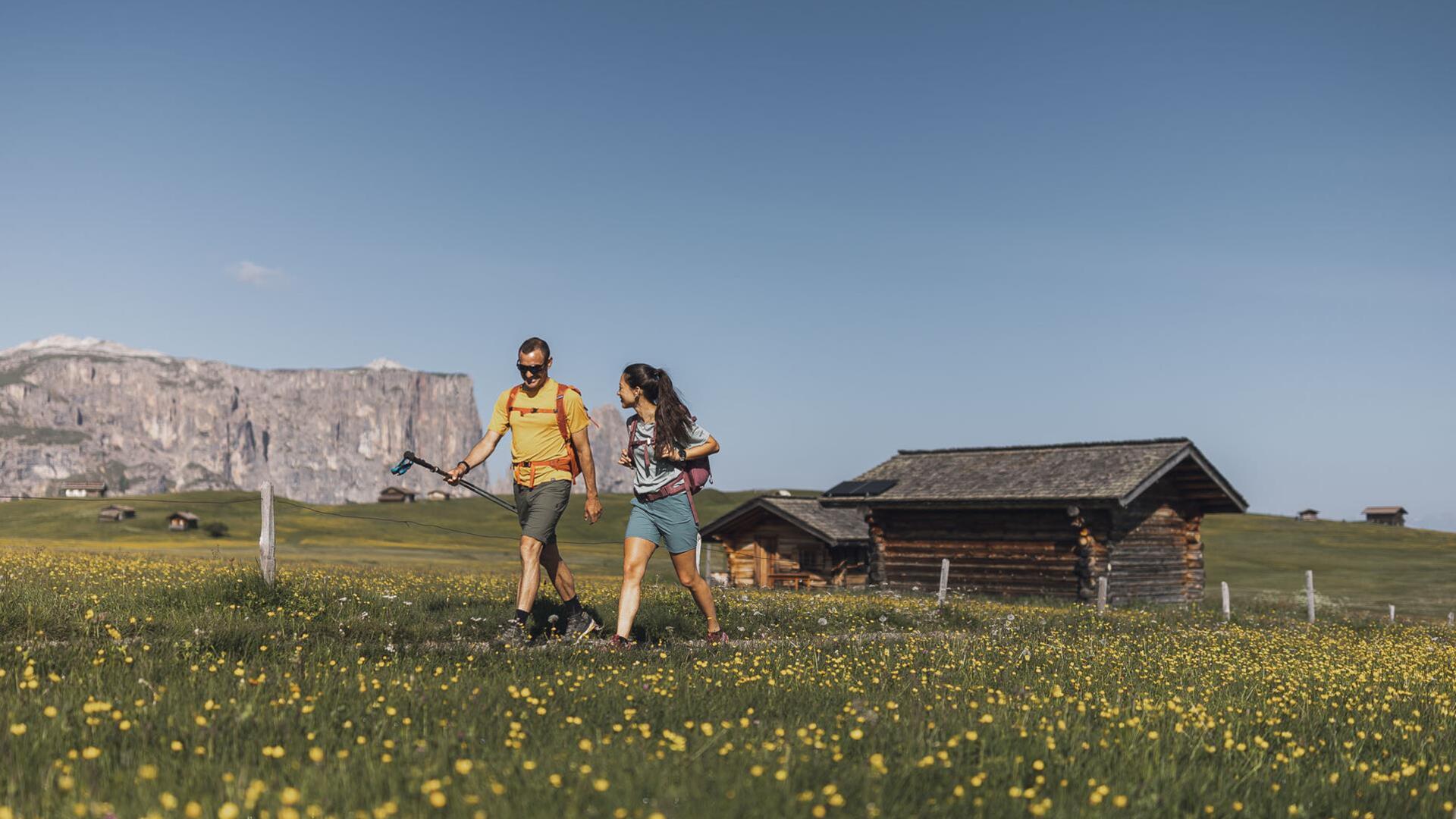
Hiking on the Seiser Alm & in the villages
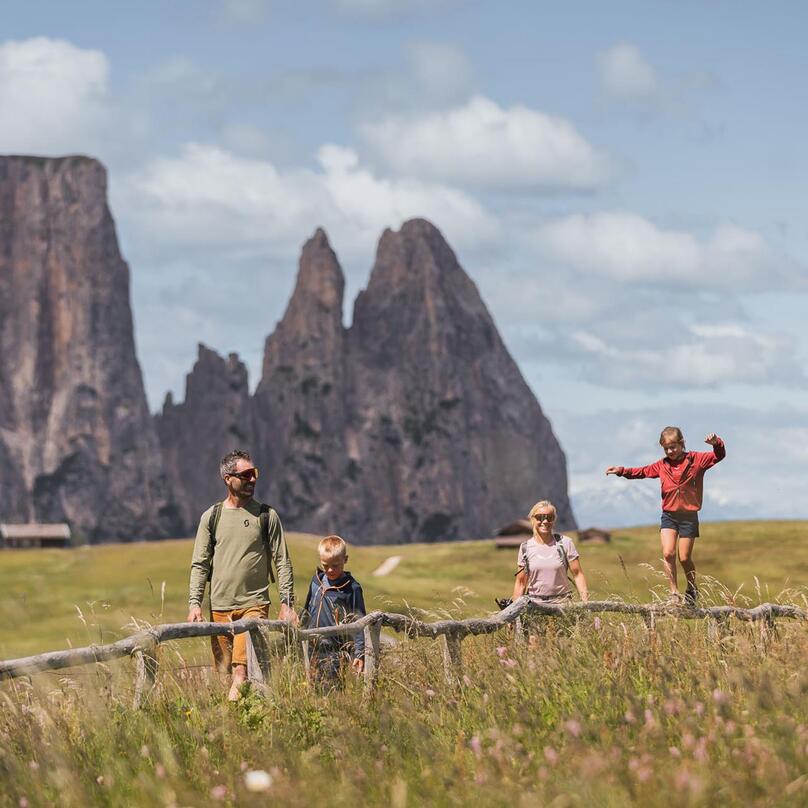
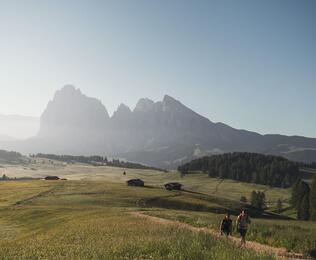
Explore the Dolomites while hiking in South Tyrol
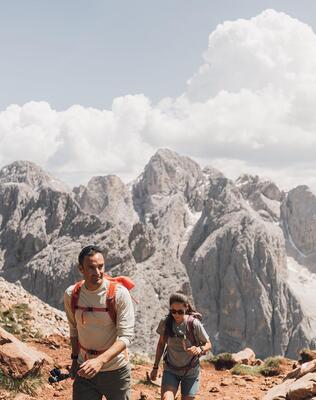
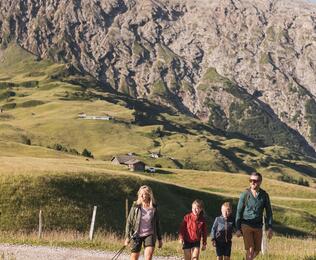
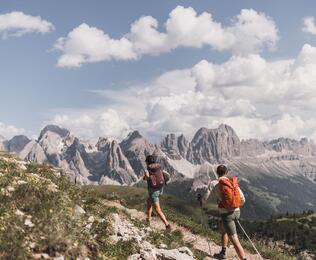
Ambitious hikers will also find plenty to enjoy. Multi-day tours allow you to explore the mountains down to the remotest corners while enjoying breathtaking views.
-
Rain impairs visibility. Ideally wait until the rain decreases and orient yourself by the ground markings.
-
When it rains, the ground becomes slippery. Walk carefully, look closely where you step and avoid steep, dangerous paths.
-
Avoid prominent objects in case of lightning (trees, boulders etc.). On a via ferrata take the next exit.
-
In rain, streams rise and develop great danger potential. Cross them only at the marked points!
-
In heavy rain, a rockfall can occur. Therefore, do not stay near vertical rock faces under any circumstances!
-
In a thunderstorm, metal objects can become dangerous. If you have something made of metal on your body, remove it immediately.
-
Leave the danger zone as quickly as possible and seek shelter at lower levels. Also observe the local warnings.
-
Make sure you can call for help in an emergency (e.g. via mobile phone) and inform someone about your route before you start.
-
Less is more — and that applies especially when packing your rucksack. Pack only what you truly need, but pack it wisely:
- Local & seasonal food:
Ideal for energy and environmentally friendly thanks to short transport routes. - Reusable container:
Keeps snacks fresh and allows you to carry your waste back down. - Reusable water bottles:
Refill at drinking fountains to avoid plastic waste. - Toilet paper:
Breaks down in 2–4 weeks; tissues take up to 5 years. - Avoid unnecessary weight:
Mountain huts offer food and drinks, so no need to carry extra.
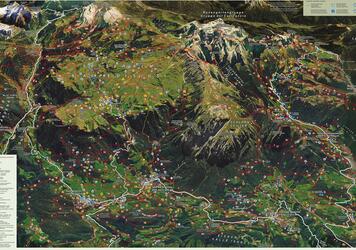
Checklist for day hikes:- Hiking map
- Waste bag or box
- Small snack
- Refillable bottle
- Sun/rain protection
- First-aid kit
- Blister plasters
- Toilet paper
- Fully charged phone & charger
- Pocketknife
- Cash
- Weather-appropriate clothing & sturdy shoes
- Local & seasonal food:
-
- Never leave anything behind in nature.
- Pack only what you need.
- Whatever you take up the mountain, take back down with you.
- Separate and dispose of waste correctly once home.
-
South Tyrol’s tap water is excellent quality. Help reduce plastic waste by using the many marked drinking fountains to refill your reusable bottle.
-
- Use public toilets whenever available.
- Prefer toilet paper over tissues — it breaks down much faster.
- Ideally: carry used toilet paper back in a small bag and dispose of it properly.
- Always go far away from water sources like streams, lakes or ponds.
-
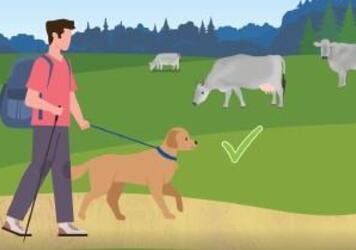
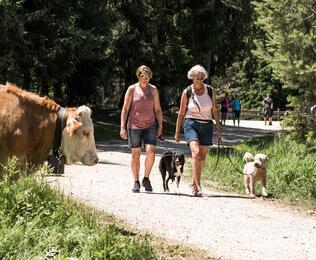
- Keep your dog on a leash at all times.
- Use the designated dog-waste stations throughout the region. Waste bags are free and must be used and disposed of properly — never in nature.
- Dog waste must not remain on meadows, as livestock feed can be contaminated and lead to miscarriages in cows
-
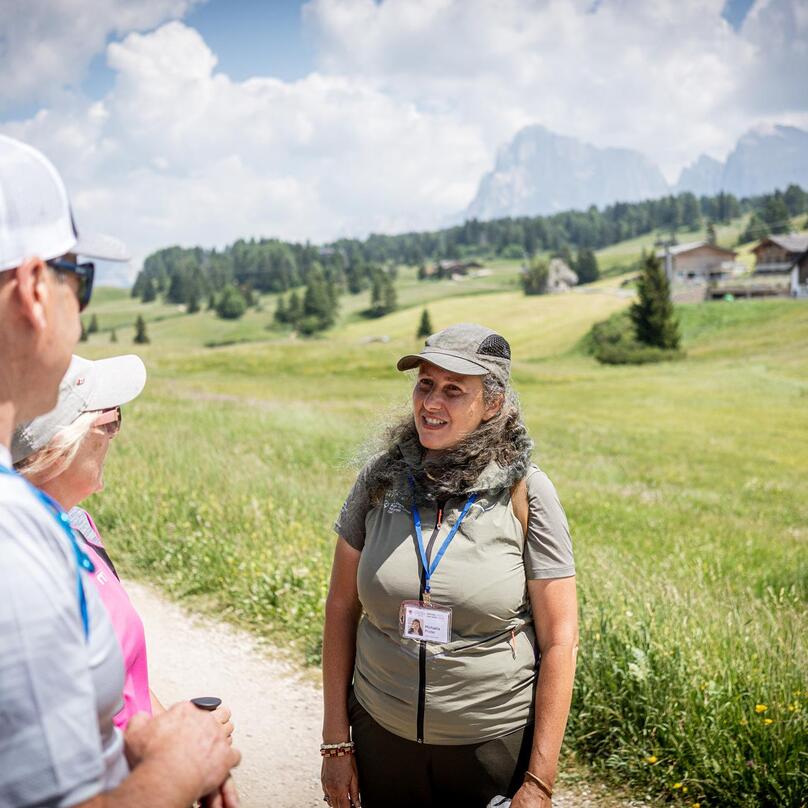
There are many hiking guides in the Dolomites Region Seiser Alm who can accompany you. Tourist offices and many accommodations also organise guided hikes several times a week. Feel free to join in!
-
Fossils are considered cultural assets under Italian law and are therefore protected, just like historical or archaeological finds.
For scientific research and decisions on how to handle these fossils, the local natural history museums and their palaeontologists are responsible in most Italian regions.
For the Province of Bozen-South Tyrol, the following applies:- Extracting fossils is prohibited throughout the region.
Collectors are required to inform themselves on-site about the compliance with legal regulations. The law stipulates severe penalties for violations.
Special permits for collecting minerals in nature parks or collecting fossils throughout the region are granted exclusively for scientific purposes. - Cultural artifacts are state property.
Cultural artifacts (Italian: beni archeologici/beni culturali) are, according to Italian law, state property. Private individuals are not considered the lawful owners of artifacts discovered by chance. If someone makes a find of palaeontological interest, they are legally obliged to report the find within 48 hours to the relevant state representatives (such as the heritage office, police, forestry office, Carabinieri, etc.). After being examined, scientific finds are stored in museum depots, where the finder can view them at any time, provided the details of the find were recorded when the item was submitted.
So, if you find a fossil or stone and are unsure whether it has scientific/palaeontological value, proceed as follows:
- Record the personal details of the finder.
- Retain the item or take a photo of it (important: place something next to it to clearly show the size comparison, such as a Euro coin).
- Send the photo to the person responsible for palaeontology in the Province of Bolzano.
- If the examination concludes that the item is not of scientific interest, the finder may theoretically keep it, but they should be aware that the legal owner remains the state or the Province of Bozen-South Tyrol.
- Extracting fossils is prohibited throughout the region.